
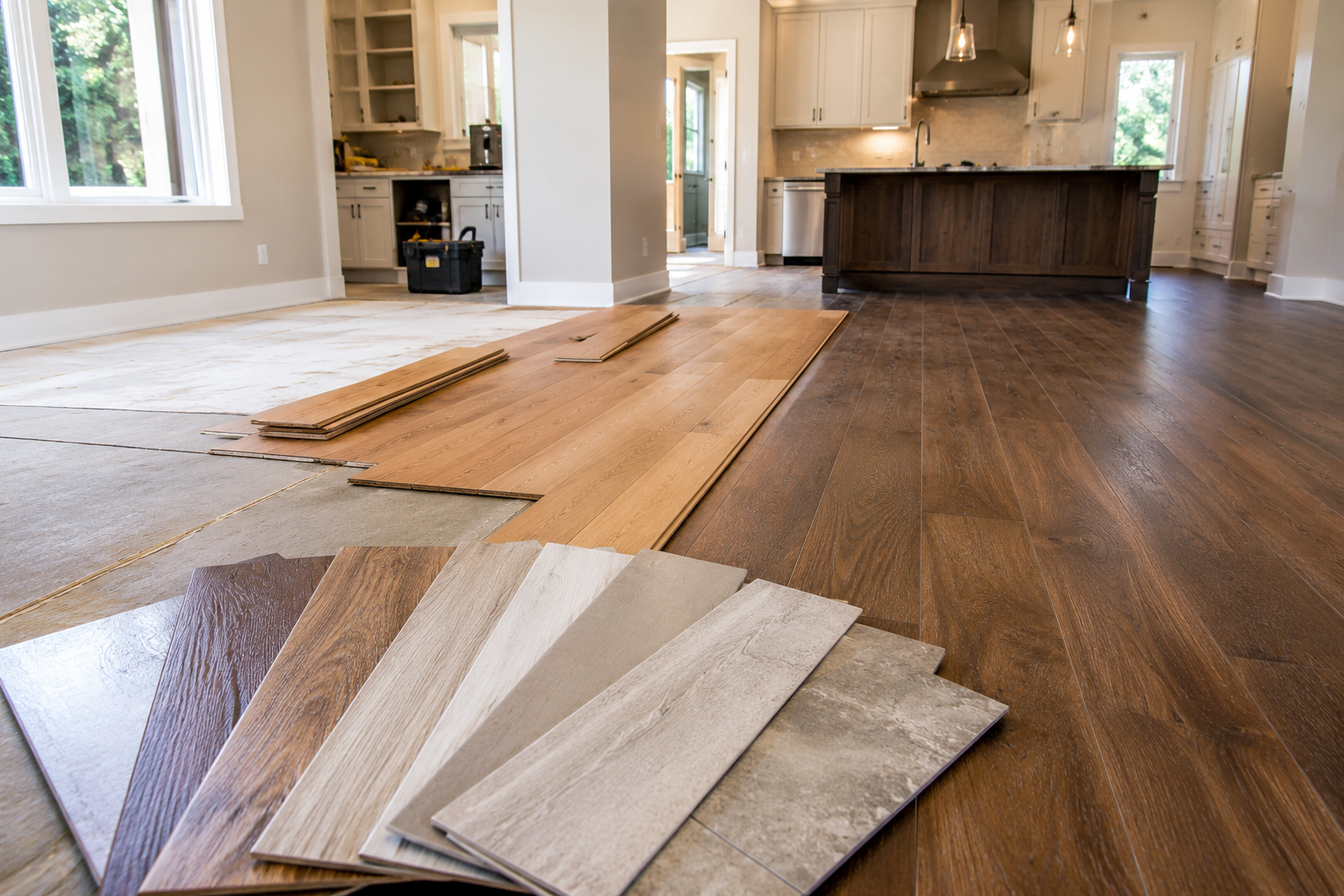

A home remodel is exciting, but it can also feel like putting together a giant puzzle. Between cabinets, paint colors, countertops, and flooring, it’s easy to wonder where to begin. One of the most common questions homeowners ask is: Should flooring be installed first or saved for the end of the project?
The answer depends on the scope of your remodel, but understanding the pros and cons of each approach can help you avoid costly mistakes and achieve a more polished result.
Why Flooring Plays a Major Role in Remodeling
Flooring does more than provide a surface to walk on. It influences the overall style, comfort, and functionality of a space. Whether you choose hardwood, luxury vinyl, laminate, tile, or carpet, your flooring choice sets the tone for the entire room.
Because flooring connects every element of a design, it often becomes one of the most important decisions in a remodeling project. The challenge is determining the right time to install it.
When Installing Flooring First Makes Sense
In many remodeling projects, flooring is installed before cabinets, vanities, or other built-in features.
This approach offers several advantages:
- Creates a seamless, uniform appearance throughout the room
- Allows greater flexibility for future layout changes
- Eliminates concerns about matching flooring when replacing cabinets later
- Provides cleaner transitions between spaces
Imagine redesigning your kitchen a few years from now. If flooring extends beneath the cabinets, you won’t be left with exposed gaps or unfinished areas when layouts change.
This method is especially common with hardwood flooring and luxury vinyl installations where continuity enhances the overall design.
Situations Where Flooring Should Come Last
Not every project benefits from installing flooring first. In some cases, it makes more sense to complete cabinets, built-ins, or heavy fixtures before laying the finished floor.
For example, certain flooring materials can be vulnerable to scratches, dents, or damage during construction. Installing them after major work is complete helps preserve their appearance.
Flooring may come last when:
Heavy Construction Is Still Underway
Large remodeling projects often involve multiple trades moving equipment and materials through the home. Waiting until the end protects the finished floor from unnecessary wear.
Specialty Flooring Requires Precise Finishing
Tile, laminate, and some floating floor systems may be easier to install after cabinetry and other permanent features are in place.
The Importance of Planning Ahead
The real key isn’t whether flooring comes first or last—it’s having a clear remodeling plan from the beginning.
Every home is different. A bathroom remodel has different requirements than a full kitchen renovation. The type of flooring you choose, the condition of the subfloor, and the scope of the project all influence the best installation sequence.
That’s why working with experienced flooring professionals can make a significant difference. A knowledgeable team can evaluate the project and recommend the most efficient approach while helping avoid delays and unexpected costs.
Bringing It All Together
So, should flooring come first or last? The best answer is: it depends on your remodel goals, materials, and project timeline.
For many homeowners, installing flooring early creates a cohesive and flexible design. In other situations, waiting until the final stages protects the investment and simplifies installation. The most successful remodels are those that balance design, durability, and proper planning.
With decades of flooring expertise and a commitment to personalized service, Allen Flooring helps homeowners navigate these decisions with confidence. From hardwood and laminate to luxury vinyl and tile, the right guidance can ensure your new floors become the foundation of a beautiful, lasting remodel.