

Have you ever walked into a small room that somehow felt surprisingly spacious? While furniture placement and wall colors play a role, one of the most powerful design tools is often right beneath your feet: flooring.
The right flooring choice can visually expand a room, create a sense of openness, and make even compact spaces feel more inviting. Whether you’re updating a small bedroom, home office, bathroom, or apartment, strategic flooring decisions can dramatically change how a space looks and feels.
Start with Lighter Flooring Colors
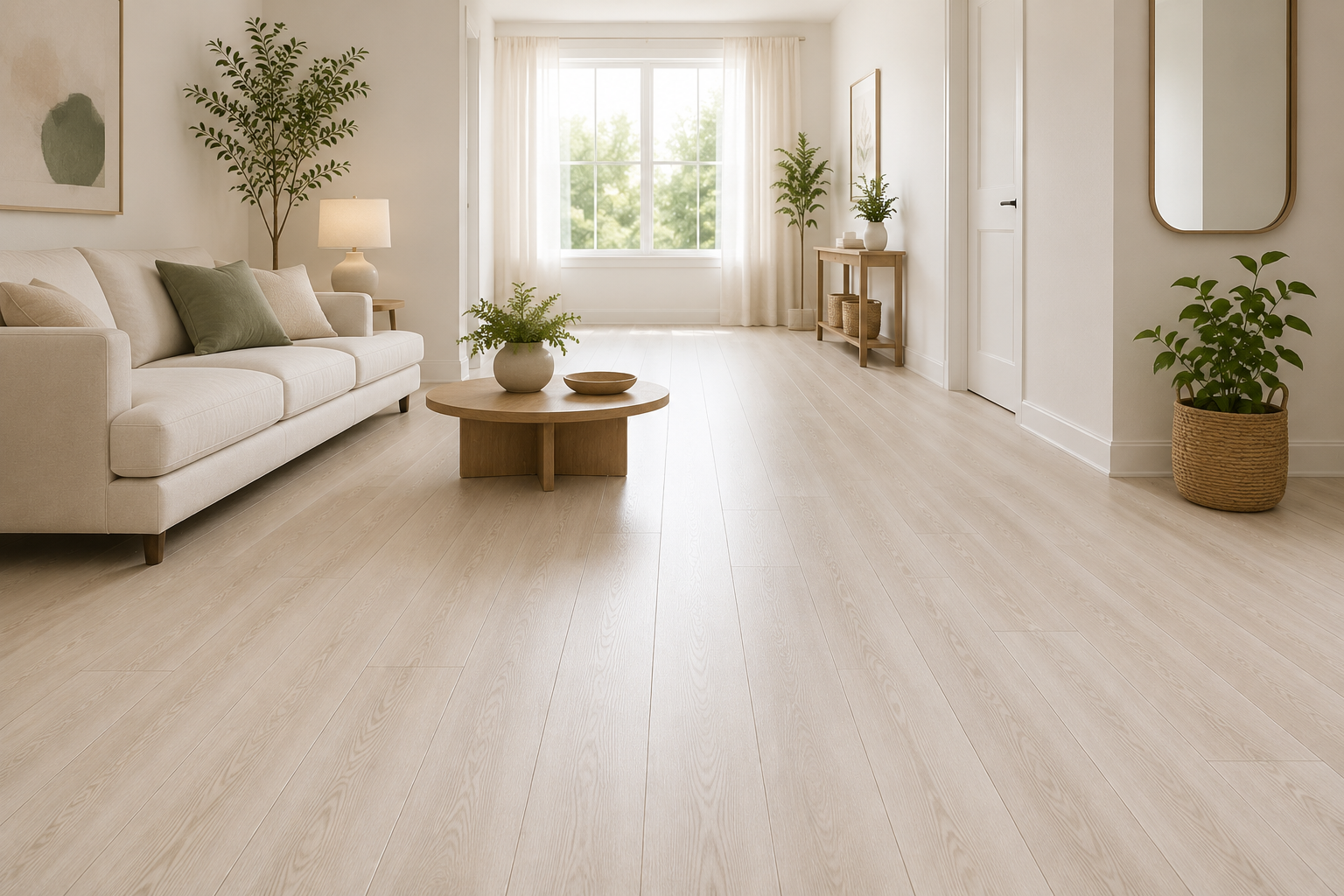
Light-colored flooring is one of the easiest ways to make a room appear larger. Shades such as light oak, natural maple, soft gray, and light-toned luxury vinyl reflect more light throughout the room, helping eliminate the closed-in feeling that darker floors can sometimes create.
Think of light flooring as a mirror for natural and artificial light. The more light that bounces around the room, the more open and airy the space feels.
Popular options include:
- Light hardwood flooring
- Luxury vinyl plank (LVP) in natural wood tones
- Neutral laminate flooring
- Large-format light-colored tile
Choose Longer and Wider Planks
When it comes to flooring design, size matters.
Longer and wider planks create fewer visual interruptions across the floor. Instead of drawing attention to multiple seams and transitions, the eye naturally follows continuous lines throughout the room.
This simple design trick can make a narrow room feel wider, and a small room feel longer. Luxury vinyl plank flooring and hardwood flooring are particularly effective because they are available in a variety of plank sizes that help create this seamless appearance.
Install Flooring in a Consistent Direction
Have you ever noticed how hallways seem longer when floorboards run in the same direction as the space?
The direction of flooring installation influences how people perceive room dimensions. Running planks parallel to the longest wall often helps elongate the room visually. In open-concept homes, using the same flooring throughout multiple rooms can also reduce visual breaks and create a more expansive feel.
The goal is to guide the eye smoothly from one area to another without interruption.
Minimize Transitions Between Rooms
One common mistake in smaller homes is using different flooring materials in every room. While variety can be appealing, excessive transitions can make spaces feel fragmented.
Using a consistent flooring material throughout adjacent rooms creates a unified look that feels larger and more connected. Luxury vinyl, hardwood, and laminate flooring are all excellent choices for achieving this seamless effect.
Consider Large-Format Tile
For bathrooms, laundry rooms, and other compact areas, larger tiles can help create the illusion of more square footage.
Why? Fewer grout lines mean less visual clutter. The floor appears cleaner, smoother, and more expansive.
Large-format tile also adds a modern, sophisticated look while maintaining the durability and low-maintenance benefits homeowners appreciate.
Work with Flooring Experts for the Best Results
Selecting flooring isn’t just about choosing a color or material. It’s about understanding how design, layout, and installation work together to enhance your space.
With more than 30 years of flooring experience, Allen Flooring helps homeowners find solutions that balance style, durability, and functionality. From luxury vinyl and hardwood to laminate and tile, their team provides expert guidance to ensure every project complements the home’s unique layout and design goals.
Final Thoughts
Small rooms don’t always require expensive renovations to feel bigger. Sometimes, the transformation starts from the ground up.
By choosing lighter colors, larger planks or tiles, consistent materials, and thoughtful installation patterns, you can create a room that feels brighter, more open, and more comfortable.
If you’re planning a flooring upgrade, remember: the right floor doesn’t just change how a room looks—it changes how spacious it feels.