Flooring
Solid vs. Engineered Hardwood: How South Carolina Humidity Should Shape Your Decision
Allen Flooring Team•October 15, 2026
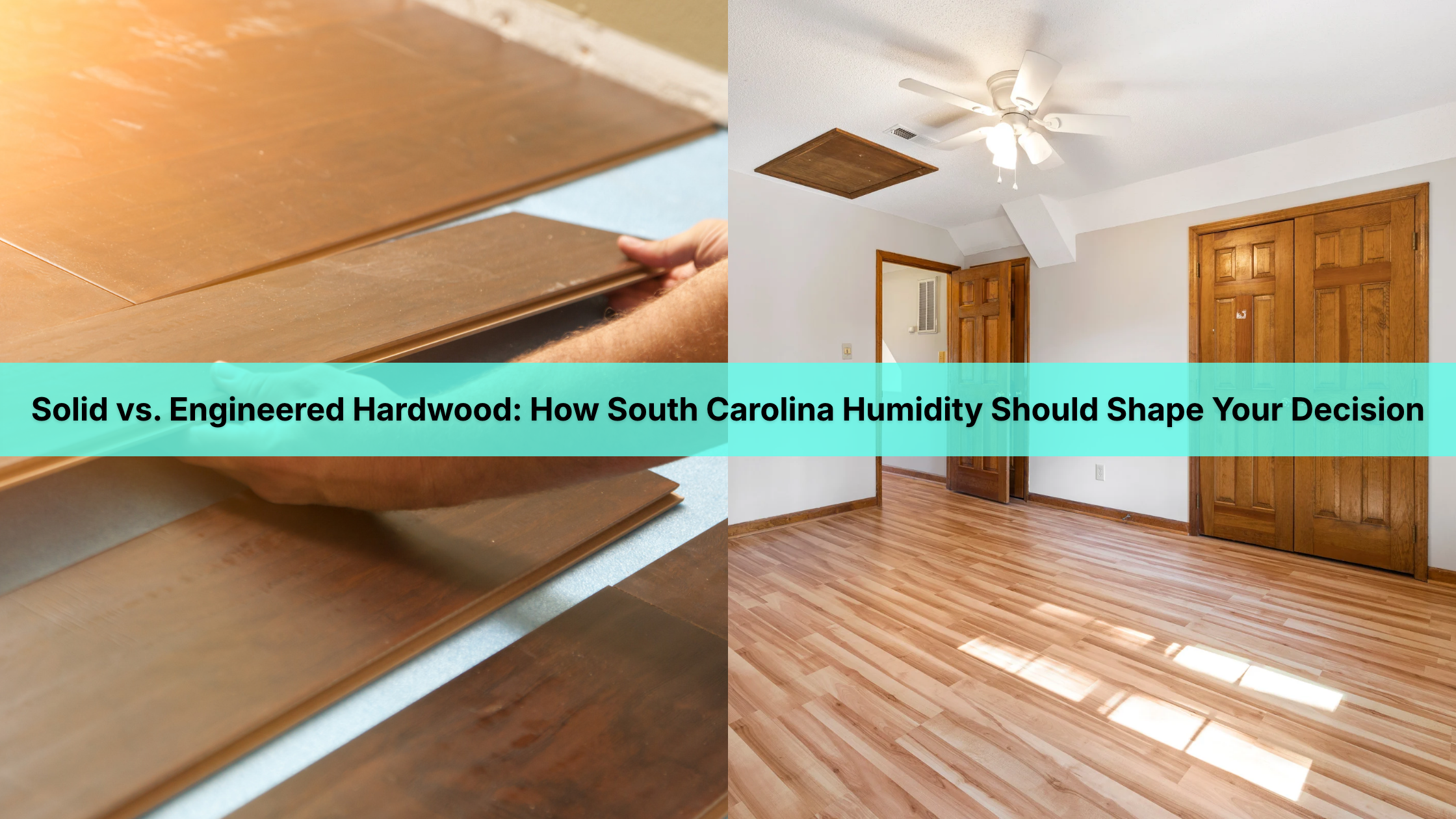
Choosing between solid and engineered hardwood flooring involves more than appearance. South Carolina's humid summers and drier winters can significantly affect how wood flooring performs over time.
Choosing between solid and engineered hardwood flooring involves more than appearance. South Carolina's humid summers and drier winters can significantly affect how wood flooring performs over time.
For Greenville homeowners, understanding how each flooring type responds to moisture, temperature, and everyday use can help ensure a beautiful, long-lasting investment.
What's the Difference Between Solid and Engineered Hardwood?
Both options provide the natural beauty of real wood, but their construction differs.
• Solid Hardwood: Made from a single piece of natural wood, solid hardwood offers durability, timeless appeal, and the ability to be refinished multiple times.
• Engineered Hardwood: Features a genuine hardwood veneer over multiple layers of plywood or composite material. This construction generally provides greater dimensional stability when humidity fluctuates.
Both can be excellent choices depending on your home's conditions.
How Does South Carolina Humidity Affect Hardwood Floors?
Wood naturally absorbs and releases moisture based on surrounding humidity levels.
In Upstate South Carolina, seasonal changes can affect flooring in several ways:
• Humid Summers: Increased moisture can cause wood planks to expand.
• Drier Winters: Indoor heating reduces humidity, potentially causing contraction and small gaps.
• Inconsistent Climate Control: Rooms with fluctuating temperatures and humidity may experience greater flooring movement.
While both hardwood types respond to moisture, engineered hardwood generally handles these fluctuations better because of its layered construction.
Maintaining consistent indoor humidity helps protect either flooring option.
Which Hardwood Flooring Works Best for Different Rooms?
Your installation location plays an important role in selecting the right flooring.
Solid hardwood is often suitable for:
• Living rooms and dining areas
• Bedrooms and hallways
• Above-grade spaces with consistent climate control
Engineered hardwood is often considered for:
• Rooms installed over concrete slabs
• Basements with properly managed moisture
• Areas experiencing greater humidity fluctuations
However, engineered hardwood isn't automatically waterproof or appropriate for every basement. Always check manufacturer specifications and moisture requirements before installation.
Can Solid and Engineered Hardwood Be Refinished?
Refinishing can restore hardwood's appearance without requiring complete replacement.
Solid hardwood generally allows multiple sanding and refinishing cycles because the wood extends throughout the plank.
Engineered hardwood has a thinner real-wood surface. Its refinishing potential depends on veneer thickness and manufacturer guidelines.
If your existing floors appear scratched or worn, a professional inspection can determine whether refinishing is a practical alternative.
What Else Should You Consider Before Buying?
Beyond construction, several factors influence hardwood flooring performance and appearance:
• Plank Width: Wider planks create a modern appearance, while narrower boards offer traditional styling.
• Wood Species: Hardness and grain patterns influence durability and appearance.
• Finish: Factory-finished and site-finished options offer different installation and customization benefits.
• Color: Certain stains and tones make scratches, dust, and everyday wear more noticeable.
For open floor plans, consistent plank widths, wood species, and finishes can create seamless transitions between connected rooms.
Choose the Right Hardwood Flooring with Allen Flooring
Whether you're renovating an older Greenville home or upgrading a newer property, choosing hardwood that suits your climate and subfloor conditions is essential.
Call Allen Flooring at (864) 236-8188 to discuss solid and engineered hardwood options and find the right flooring solution for your home.